
 ultimate-guide
Why Luxury Furniture Is Worth the Investment
Table of Contents
- Why Luxury Furniture Is Worth the Investment: The Real Math
- What Sets Luxury Furniture Apart from Fast Furniture
- How to Identify High-Quality Furniture Before You Buy
- The Cost Per Use Furniture Calculation That Changes Everything
- Luxury Furniture Resale Value and Depreciation
- Sustainability: The Environmental Case for Buying Less, Buying Better
- Conclusion: Build a Home That Appreciates
- Frequently Asked Questions
Last Updated: September 8, 2026
The debate over whether luxury furniture is worth the investment usually misses the point. It frames the purchase as a cost rather than a calculation of value over time. When you compare a $1,800 dining set that lasts two decades against a $400 set that needs replacing every three years, the math starts to favor the premium option long before you factor in comfort and aesthetics. In this guide from Eleviq9, we break down the real financial, environmental, and experiential case for buying better, along with the objective quality markers that separate genuine heirloom pieces from cleverly marketed fast furniture.
The core insight is that luxury furniture is worth the investment when measured by cost-per-use, structural integrity, and resale value, not by the sticker price alone. A well-constructed piece of solid wood or premium upholstery outlasts several cycles of budget replacements, delivers superior ergonomic support, and holds a meaningful portion of its value. Below, we'll show you exactly how to run that calculation for your own home, what to inspect before you buy, and why the sustainability argument for buying less but buying better has never been stronger.
Why Luxury Furniture Is Worth the Investment: The Real Math
Luxury furniture is a long-term asset that delivers value through durability, timeless design, and material integrity, rather than a disposable expense. The financial case rests on a simple principle: a quality piece used daily for twenty years costs far less per use than a budget alternative replaced every few years.
Most households replace fast furniture within three to five years because joints loosen, veneers peel, and upholstery wears thin. A premium piece with solid wood construction and quality joinery techniques can serve for decades, often outliving the trend cycle that renders cheaper items obsolete. When you divide the purchase price by the years of daily use, the investment piece frequently emerges as the more economical choice.
What Sets Luxury Furniture Apart from Fast Furniture
The difference between luxury and fast furniture is not subjective taste; it is measurable in materials, construction methods, and design longevity. Fast furniture is engineered for a short lifecycle, prioritizing low cost over structural integrity, while high-end manufacturing focuses on pieces meant to be repaired, reupholstered, and kept.
Material Integrity and Joinery Techniques
Solid wood construction, dovetail joints, and mortise-and-tenon connections signal furniture built to endure. These joinery techniques distribute weight and resist the loosening that plagues particleboard and staple-gun assembly. Premium upholstery uses high-density foam and tightly woven fabrics that resist sagging and pilling, maintaining their aesthetic appeal for years rather than months.
Ergonomics and Structural Integrity
A common mistake is assuming all furniture offers the same comfort. Luxury pieces are designed with ergonomic support in mind, from lumbar curve placement in seating to proper seat depth and armrest height. This craftsmanship reduces physical strain during daily use, a benefit that compounds over a decade of dinners, conversations, and quiet evenings.
How to Identify High-Quality Furniture Before You Buy
Most guides tell you to look for 'solid wood' or 'good construction,' but they stop short of teaching you how to verify those claims. In a market where particleboard is often hidden behind walnut veneer, the difference between a genuine heirloom piece and a cleverly marketed imitation comes down to specific, testable details. Here is the objective checklist we use when evaluating a piece.
The Hardware and Joinery Test
Open a drawer and look at the corners. A dovetail joint, interlocking wedge-shaped pins visible on the side of the drawer, is the traditional hallmark of quality. It mechanically locks the drawer together, resisting the stress of daily opening and closing. In contrast, a butt joint or a drawer held together with staples and glue will loosen within a few years of regular use. Run your hand along the inside of the drawer; a quality piece will have a smooth, sanded interior, while a rushed production will feel rough or show exposed staple heads.
The Weight and Stability Assessment
Solid wood and kiln-dried hardwoods like oak, maple, or walnut are dense. When you press down on a corner of a table or a chair, a well-constructed frame should not flex or creak. A common trick in lower-tier manufacturing is to use a solid wood 'skin' over a particleboard core. To check, look at the underside of a tabletop or the back panel of a cabinet. You are looking for a continuous grain pattern that wraps around the edge. If the edge shows a different, lighter-colored material, you are likely looking at veneer over engineered wood.
The Authenticity Red Flags
Be wary of vague material descriptions. A piece labeled 'wood frame' may be a mix of solid wood and MDF. Legitimate manufacturers will specify the exact wood species and the percentage of solid wood used. Similarly, 'genuine leather' is a specific grade, but it is often a split or bonded leather that wears poorly. Look for 'full-grain' or 'top-grain' leather specifications. If a retailer cannot tell you the origin of the wood or the density of the foam in the cushions, that lack of transparency is itself a warning sign. A true luxury maker is proud of its supply chain and will provide detailed specifications, including joinery types and finish application methods, not just stylized lifestyle photography.
The Refinishing Test
One of the most telling differences between luxury and fast furniture is how it ages. A solid wood table can be sanded and refinished multiple times over its life, erasing years of scratches and wear. A veneered piece, by contrast, can only be refinished a few times before the veneer is sanded through. Ask the retailer or maker whether the piece can be refinished and what the recommended care protocol is. If the answer is 'just wipe it with a damp cloth,' you are likely looking at a piece designed for the landfill, not the heirloom market.
The Cost Per Use Furniture Calculation That Changes Everything
The cost per use furniture calculation is the most honest way to compare a luxury purchase against a budget alternative. The formula is straightforward: divide the total price by the estimated number of uses over the piece's lifespan.
Consider a dining set priced at $1,787.73, used daily for twenty years. That works out to roughly 7,300 meals, bringing the cost per use to about 24 cents. A budget set at $400, replaced every four years, costs $2,000 over the same period and delivers inferior comfort and aesthetic appeal throughout. The math does not favor the cheaper option.
| Furniture Type | Initial Cost | Expected Lifespan | Cost Per Year of Use |
|---|---|---|---|
| Fast furniture | Low | 3-5 years | High (frequent replacement) |
| Mid-range | Moderate | 8-12 years | Moderate |
| Luxury investment piece | High | 20+ years | Lowest over full lifecycle |
Luxury Furniture Resale Value and Depreciation
Luxury furniture resale value behaves differently from fast furniture, which typically depreciates to zero within a few years. Well-maintained pieces from reputable makers retain a meaningful portion of their original price, particularly items with timeless design and solid wood construction that can be refinished.
This value retention turns the purchase into a more liquid asset. When your style evolves, a quality piece can be sold rather than sent to a landfill, recouping part of your initial outlay. Fast furniture, by contrast, rarely attracts buyers because its structural integrity fails quickly and its trend-driven aesthetic dates fast. The secondary market rewards durability, craftsmanship, and design longevity, the same qualities that make a piece worth buying new.
Sustainability: The Environmental Case for Buying Less, Buying Better
The environmental math is straightforward: the most sustainable piece of furniture is the one you never have to replace. But buying a luxury piece is only the first step. To realize its environmental advantage, you must actively maintain it. A $3,000 sofa that is neglected and discarded after eight years has a worse footprint than a $1,500 sofa that is properly cared for and kept for fifteen. The investment in quality is inseparable from the commitment to care.
The Care Protocol That Preserves Value
The difference between a piece that lasts twenty years and one that fails at ten is often routine maintenance. For wood furniture, the protocol is simple but specific: dust regularly with a microfiber cloth, use coasters to prevent water rings, and apply a high-quality furniture wax or polish twice a year to replenish the finish. Avoid silicone-based polishes, which build up a film that attracts dust and can complicate future refinishing. For upholstery, vacuum weekly with an upholstery attachment to remove abrasive dust and dirt before it works into the fibers. Rotate seat cushions monthly to ensure even wear, and address spills immediately with a blotting, not rubbing, motion.
Repair Over Replacement
A core principle of sustainable consumption is extending product life through repair. Unlike fast furniture, which is often glued and stapled beyond practical repair, quality pieces are designed to be serviced. A loose joint in a solid wood chair can be re-glued and clamped. A worn seat cushion can be re-foamed and reupholstered. A scratched tabletop can be sanded and refinished. These repairs are not hypothetical; they are standard services offered by furniture restorers and upholsterers. Before you buy, ask whether the manufacturer offers replacement parts or repair services. Some premium brands maintain a stock of replacement cushions, springs, and finish touch-up kits for decades after the original sale. This commitment to repairability is the single strongest indicator that a piece is designed for a long lifecycle.
The End-of-Life Advantage
When a quality piece finally reaches the end of its usable life in your home, its journey does not have to end in a landfill. Solid wood furniture can be donated to organizations like Habitat for Humanity ReStore, which resells used furniture to fund community projects. It can be sold on the secondary market, where a well-maintained solid wood piece retains significant value. Or it can be passed down. Fast furniture, by contrast, is rarely accepted by donation centers because of its poor condition and low resale value, ensuring its final destination is almost always a landfill. The environmental benefit of luxury furniture is not just in its longer life, but in its second and third lives.
Conclusion: Build a Home That Appreciates
A home filled with fast furniture requires constant replacement, generates steady waste, and never quite achieves the cohesive, curated atmosphere most of us are after. Choosing investment pieces changes that trajectory. Each quality purchase builds toward a living space that feels intentional, supports your comfort daily, and retains value over time.
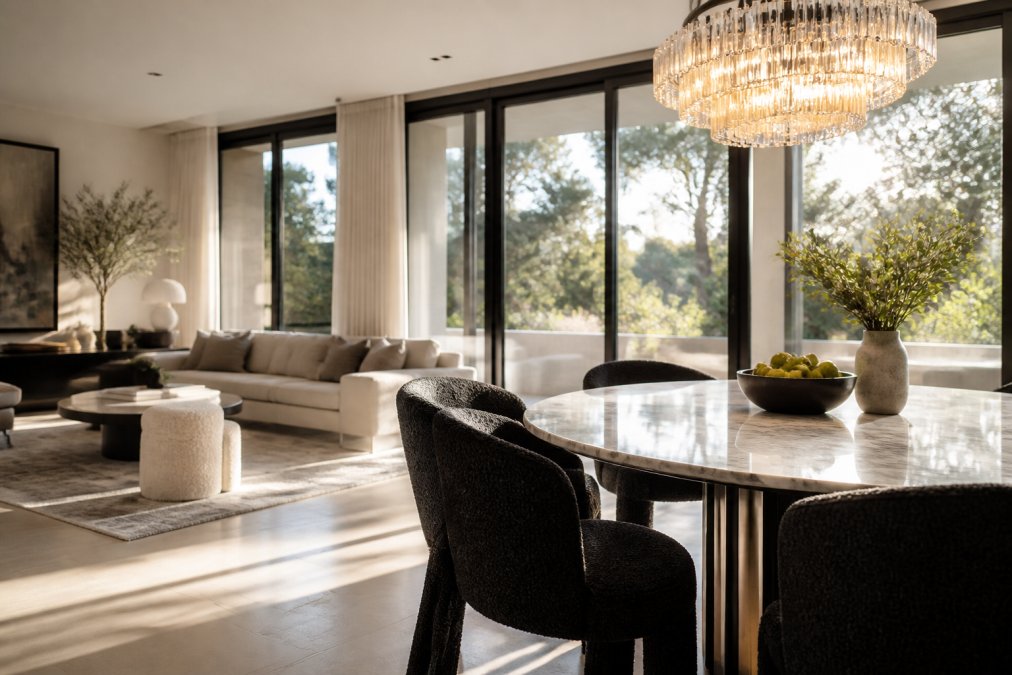
At Eleviq9, our curated collection of luxury home decor and modern furniture is built around this philosophy. From the seven-piece faux marble dining set with plush boucle seating to statement lighting and mirrored accents, each piece is selected for its material integrity, timeless design, and ability to elevate your living spaces. When you choose pieces designed to last, you are not spending more; you are investing in a home that reflects your personal style for decades to come.
Get started with Eleviq9 and build a home that appreciates in comfort, character, and value, one considered purchase at a time.
Frequently Asked Questions
Is luxury furniture worth it?
Yes, when you calculate cost per use. A $1,700 dining set used daily for 15 years costs about $0.31 per use, while a $400 fast furniture set replaced every 3 years costs more over the same period. Luxury furniture also holds resale value, making them a smarter long-term investment.
How can you tell if a piece of furniture is a high-quality investment?
Look for solid wood construction rather than veneers or particleboard, and examine the joinery: dovetail joints and mortise-and-tenon connections signal durability. Check that drawers glide smoothly, the piece feels stable and heavy, and premium upholstery uses high-density foam. These markers of craftsmanship indicate the piece will last for decades.
Does luxury furniture hold its resale value?
Yes, luxury furniture resale value is significantly higher than mass-produced pieces. While fast furniture often depreciates to zero within a few years, well-maintained luxury pieces from reputable brands can retain a meaningful portion of their original value. Timeless designs from established makers are especially sought after in the secondary market, making them a smarter financial choice.
What is the difference between fast furniture and heirloom-quality pieces?
Fast furniture uses particleboard, veneers, and stapled joints designed to last a few years. Heirloom-quality pieces feature solid wood, dovetail joinery, and premium upholstery built to endure decades of use. The difference shows in structural integrity, repairability, and design longevity. Investing in heirloom quality means buying once and enjoying the piece for a long time.