 comparison
Neiman Marcus vs Luxury Home Brands: Where to Shop
Table of Contents
- Neiman Marcus vs Luxury Home Brands: The Core Difference
- Quick Comparison: Department Store vs. Specialized Retailer
- Authenticity, Curation, and the Supply Chain
- Customer Service, Returns, and After-Sales Support
- Loyalty Programs and Exclusive Collections
- Luxury Home Decor Shopping Strategies That Work
- Direct-to-Consumer Luxury Furniture Benefits
- The Verdict: Choosing the Best Luxury Furniture Brands for 2026
- Frequently Asked Questions
Last Updated: September 4, 2026
Neiman Marcus vs Luxury Home Brands: The Core Difference
Choosing between a department store and a dedicated luxury home brand is a decision about who you trust to curate your space. The core difference is specialization: a department store offers broad selection, while specialized luxury home brands focus entirely on furniture, lighting, and decor, resulting in deeper expertise and more considered curation. At Eleviq9, we have spent years analyzing how retail serves discerning homeowners, and the gap between these models is wider than most shoppers realize.
This guide compares buying from a department store against direct-to-consumer luxury home brands, examining authenticity, customer service, loyalty structures, and where your money goes. The goal is to help you decide which route delivers better long-term value for your home.
Quick Comparison: Department Store vs. Specialized Retailer
A department store is a generalist, carrying clothing, cosmetics, and housewares alongside furniture, with its home section competing among dozens of departments. A specialized luxury home brand stakes its entire reputation on getting furniture, lighting, and decor right.
Department stores negotiate exclusive collections with designers but carry high volumes of seasonally rotating items. Specialized retailers maintain a curated selection reflecting a single design point of view, making the shopping experience more cohesive.
| Factor | Department Store | Specialized Luxury Home Brand |
|---|---|---|
| Product Focus | Broad across categories | Deep in home furnishings |
| Curation | Seasonal, volume-driven | Design-led, intentional |
| Expertise | Generalist sales staff | Specialized product knowledge |
| Inventory | High turnover, wide range | Stable, considered selection |
| Best For | One-stop shopping | Cohesive, lasting style |
Authenticity, Curation, and the Supply Chain
Authenticity is the quiet anxiety of luxury retail. Buying from a department store means buying from an authorized retailer with established supply chains, offering some assurance of legitimacy. However, the store's scale means products pass through complex distribution networks, and the store rarely has a hand in how an item is made.
Specialized luxury home brands often control more of their supply chain, working directly with artisans and manufacturers. This lets them verify materials and construction at every stage, translating into more transparent product information. When a brand says a vase is hand-blown glass, they can trace that claim back to the workshop floor.
Customer Service, Returns, and After-Sales Support
Post-purchase support is where the two models diverge most sharply, and where most guides stop short. They mention return policies but rarely explain what happens when a $2,000 sofa arrives torn or a vase shows up in pieces. The real difference is the logistics and accountability that follow.
The Department Store Experience: Standardized but Distant
Department stores process enormous return volumes, so their policies are standardized and rigid. You get a window, often 30 to 60 days, and once it closes, your recourse narrows. For large furniture, returns often mean coordinating a freight pickup that can take weeks and may involve undisclosed restocking fees.
Warranty coverage is usually the manufacturer's warranty with little store-level advocacy. If a drawer mechanism fails after four months, the store's role ends at providing the manufacturer's contact information, leaving you to manage your own repair. The store has no incentive to mediate because they've already captured your payment.
The Specialized Brand Experience: Direct Accountability
Specialized luxury home brands treat after-sales service as part of the product, and the direct-to-consumer model changes repair logistics. Because the brand controls the supply chain, they can often ship a replacement part directly rather than requiring a full return. A chipped marble lamp base might be resolved with a simple replacement base, not a full return-and-reorder cycle.
This direct relationship also means the brand can offer more personalized support, including help with styling, assembly guidance, and more flexible resolutions when something arrives damaged. The Federal Trade Commission guidance on consumer warranties underscores that warranty coverage is only as good as the retailer's willingness to honor it, and a brand with a direct relationship to the maker is better positioned to handle repairs and replacements.
The Repair Logistics Gap: A High-Intent Question Most Guides Ignore
Few comparison articles answer this: who fixes the item when it breaks a year later? For a department store purchase, the answer is often no one you can easily reach. The store has moved on to new inventory, and the manufacturer may only offer repairs through authorized channels requiring you to ship the item to a regional service center at your own cost.
Specialized brands that control their own production are more likely to have a defined repair path. Before you commit to a purchase, ask these three questions:
- Who handles a defect claim after the return window closes?
- Do you offer repair services or replacement parts for your products?
- What is the typical turnaround time for a repair or replacement?
The answers will tell you more about the long-term cost of ownership than any sale price ever will.
Loyalty Programs and Exclusive Collections
Department stores built loyalty programs around points, tiered status, and sales events, rewarding spending volume with perks like early access or free shipping. The catch is that rewards push you toward whatever the store needs to move, not what your home needs.
Specialized luxury home brands build loyalty through product quality and repeat design consultations rather than points systems, creating a personal shopper dynamic where the brand learns your taste. Exclusive collections also differ: a department store exclusive is often a designer diffusion line for mass production, while a specialized brand's exclusives are limited artisan runs, adding scarcity and collectibility.
Luxury Home Decor Shopping Strategies That Work
Shopping for luxury home decor requires strategy beyond browsing. The most effective approach is understanding how your chosen retail channel impacts your ability to build a cohesive, lasting interior. Here is a framework for navigating both models.
Strategy 1: Define Your 'Design Thesis' Before You Shop
Start by defining the aesthetic you want to commit to, as that filters every subsequent choice. For modern bohemian, look for natural textures, warm metallics, and sculptural forms. For glam, prioritize mirrored surfaces, crystal details, and high-contrast finishes. Write down three adjectives describing your ideal space; they filter impulse purchases in a department store and help evaluate a specialized brand's curation.
Strategy 2: Use the 'Anchor Piece' Method for Room Building
Anchor a room with one statement piece and build around it. In a department store, you might find a striking sofa on sale but need to source complementary pieces from different departments, leading to a disjointed look. A specialized brand often designs collections meant to work together, making it easier to build a cohesive room.
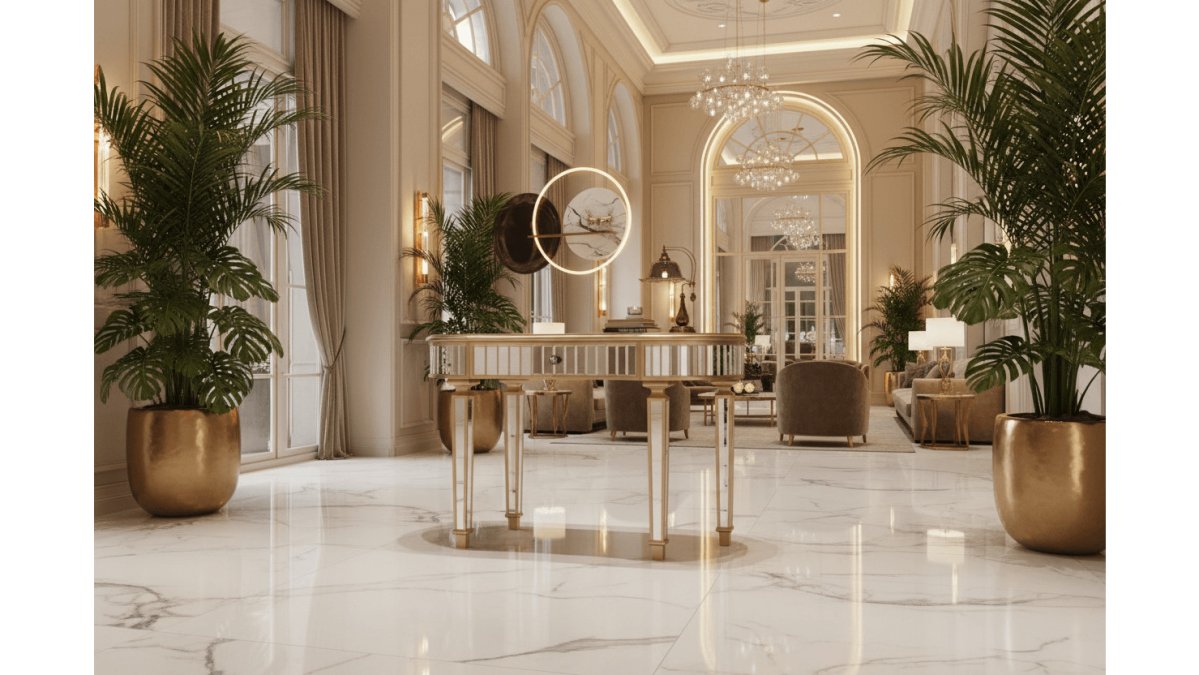
For example, a Mirrored Console Table with Crystal Knob at $346.68 anchors an entryway, while an Arched Gold Wall Mirror at $95.70 opens up a smaller space by reflecting light. Layer in smaller accents like the Elegant White Glass Vase Set with Gold Rim at $64.75 to add visual depth without overwhelming the room. The key is that these pieces are designed within a shared visual language, reducing the risk of a mismatched final result.


Strategy 3: Evaluate the 'Total Cost of Ownership'
This strategy separates savvy luxury shoppers from the rest. Total cost of ownership includes purchase price plus maintenance, repair, and replacement costs. A department store piece at 40% off might seem like a bargain, but lower-grade materials may require replacement in three years. A specialized brand piece at full price might last a decade, making its per-year cost lower.
Ask these questions to calculate total cost of ownership:
- What materials are used in the construction, and how durable are they?
- Does the brand offer repair services or replacement parts?
- What is the expected lifespan of the product with normal use?
- Does the brand have a trade-in or resale program that adds to its long-term value?
Strategy 4: Time Your Purchases for Maximum Value
Department stores operate on a predictable markdown calendar, with deep discounts during end-of-season clearance events in January and July. Timing purchases to these windows yields significant savings, but you are buying from a limited selection where the best pieces may be gone.
Specialized luxury home brands are less predictable; some offer seasonal sales while others maintain consistent pricing to protect brand value. The better strategy is to build a relationship: sign up for their newsletter, follow their social channels, and ask about upcoming collections. Many offer early access or private sales to their email list, giving you first pick of limited runs.
Strategy 5: Verify Authenticity and Provenance
In an era of lookalikes and gray-market goods, provenance is a form of value. A department store purchase is authorized, but the item's journey from factory to floor can be opaque. Ask for the origin story. A specialized brand working directly with artisans can often tell you the workshop and materials used, transparency that justifies the price.
By applying these strategies, you move from passive shopper to active curator of your home, making informed decisions about how your space will look, function, and hold up over time.
Direct-to-Consumer Luxury Furniture Benefits
The direct-to-consumer model has reshaped luxury furniture pricing. By removing the department store intermediary, specialized brands eliminate the wholesale markup that inflates prices by 40 to 50 percent, saving that goes back to the consumer or into higher-quality materials.
Another benefit is inventory management. Department stores often push manufacturers toward mass production to fill floor space, which can compromise material quality. Direct-to-consumer luxury furniture brands can commission smaller batches with better wood, thicker glass, and more durable hardware. The McKinsey analysis of the direct-to-consumer retail model notes that brands selling directly gain tighter control over both product quality and the customer relationship, which builds consumer trust over time.
The Verdict: Choosing the Best Luxury Furniture Brands for 2026
The best luxury furniture brands for 2026 will offer transparency, durability, and a clear point of view. Department stores still serve for convenience and breadth, but for homeowners wanting pieces that last with a brand that stands behind them, specialized retailers are the stronger choice.
The deciding factor should be how you define value. If value means getting the lowest price on a trend piece you may replace in two years, a department store sale is hard to beat. If value means owning a piece that holds up structurally and stylistically for a decade, the direct relationship with a specialized luxury home brand wins. Consider how research on consumer sentiment toward retail consolidation shows shoppers increasingly favoring brands with clear values and quality commitments over sprawling retail options.
For a cohesive, timeless look, a curated selection from a single source is easier to live with than a pile of impulse purchases from different departments. Eleviq9 offers exactly that: a focused collection of lighting, mirrors, wall art, and decor designed to work together. The Green Gold Ceramic Vase at $43.60 and the White Ceramic Donut Vases at $39.87 are versatile pieces that adapt as your style evolves. When you buy from a brand that curates deliberately, you are not just buying furniture; you are buying a design perspective that keeps your home cohesive for years.

Frequently Asked Questions
Is Neiman Marcus considered a luxury home retailer?
Yes, Neiman Marcus carries luxury home goods, but it functions as a department store, not a specialized home brand. This means its home section is a curated mix of many third-party labels. A dedicated luxury home brand, by contrast, focuses exclusively on furniture and decor, which often results in more cohesive collections and deeper product expertise. For a single accent piece, Neiman Marcus works well. For a fully coordinated room, a specialized retailer offers a more consistent point of view.
What are the benefits of buying furniture directly from luxury brands vs. department stores?
Buying direct from a specialized luxury home brand cuts out the middleman. You often get better pricing for comparable quality, and the brand controls the entire experience, from manufacturing to delivery. Department stores like Neiman Marcus source from many suppliers, so quality and after-sales service can vary by brand. Direct-to-consumer luxury furniture benefits include more consistent warranty coverage and a team that knows the product's construction intimately.
Is it better to shop for home decor at a department store or a specialized luxury brand?
It depends on what you are buying. For a statement piece like a designer vase or a gift item, a department store offers convenience and a wide selection. For larger investments like a mirrored console table or wall mirror, a specialized luxury brand is usually the better choice. Specialists provide detailed product specifications, clearer warranty coverage, and a more consistent design aesthetic. You also avoid the risk of buying a piece that was produced for a department store's promotional pricing cycle.
Does Neiman Marcus offer exclusive home decor collections?
Neiman Marcus does carry exclusive collaborations and pieces you won't find everywhere. However, these are often limited-run partnerships with external designers. A dedicated luxury home brand builds its entire catalog around its own exclusive designs. This means every piece, from vases to lighting, is designed to work together. If you are layering a room over time, a brand with a cohesive internal collection makes it easier to add pieces later that will match your original purchase.
What should I check before buying a large furniture piece from a department store?
Before you buy a large item like a console table or mirror from a department store, confirm who handles damage claims and repairs. Department stores often route you to the original manufacturer, which can mean slow communication. Also check the return window and whether restocking fees apply. With a specialized luxury home brand, you typically deal with one team for the entire post-purchase process. Ask about warranty coverage for moving parts, like drawers, and whether repair parts are stocked.
Choosing where to buy luxury home pieces is ultimately a choice about accountability. Department stores spread their attention across many categories, while specialized luxury home brands concentrate on getting the details right. Eleviq9 offers a curated collection of modern furniture, elegant lighting, and statement decor for homeowners who want quality they can verify. Explore the collection and find pieces that will still feel right years from now.
This article was written using GrandRanker
Frequently Asked Questions
Q: Is Neiman Marcus considered a luxury home retailer?
A: Yes, Neiman Marcus carries luxury home goods, but it functions as a department store, not a specialized home brand. This means its home section is a curated mix of many third-party labels. A dedicated luxury home brand, by contrast, focuses exclusively on furniture and decor, which often results in more cohesive collections and deeper product expertise. For a single accent piece, Neiman Marcus works well. For a fully coordinated room, a specialized retailer offers a more consistent point of view.
Q: What are the benefits of buying furniture directly from luxury brands vs. department stores?
A: Buying direct from a specialized luxury home brand cuts out the middleman. You often get better pricing for comparable quality, and the brand controls the entire experience, from manufacturing to delivery. Department stores like Neiman Marcus source from many suppliers, so quality and after-sales service can vary by brand. Direct-to-consumer luxury furniture benefits include more consistent warranty coverage and a team that knows the product's construction intimately.
Q: Is it better to shop for home decor at a department store or a specialized luxury brand?
A: It depends on what you are buying. For a statement piece like a designer vase or a gift item, a department store offers convenience and a wide selection. For larger investments like a mirrored console table or wall mirror, a specialized luxury brand is usually the better choice. Specialists provide detailed product specifications, clearer warranty coverage, and a more consistent design aesthetic. You also avoid the risk of buying a piece that was produced for a department store's promotional pricing cycle.
Q: Does Neiman Marcus offer exclusive home decor collections?
A: Neiman Marcus does carry exclusive collaborations and pieces you won't find everywhere. However, these are often limited-run partnerships with external designers. A dedicated luxury home brand builds its entire catalog around its own exclusive designs. This means every piece, from vases to lighting, is designed to work together. If you are layering a room over time, a brand with a cohesive internal collection makes it easier to add pieces later that will match your original purchase.
Q: What should I check before buying a large furniture piece from a department store?
A: Before you buy a large item like a console table or mirror from a department store, confirm who handles damage claims and repairs. Department stores often route you to the original manufacturer, which can mean slow communication. Also check the return window and whether restocking fees apply. With a specialized luxury home brand, you typically deal with one team for the entire post-purchase process. Ask about warranty coverage for moving parts, like drawers, and whether repair parts are stocked.