 how-to
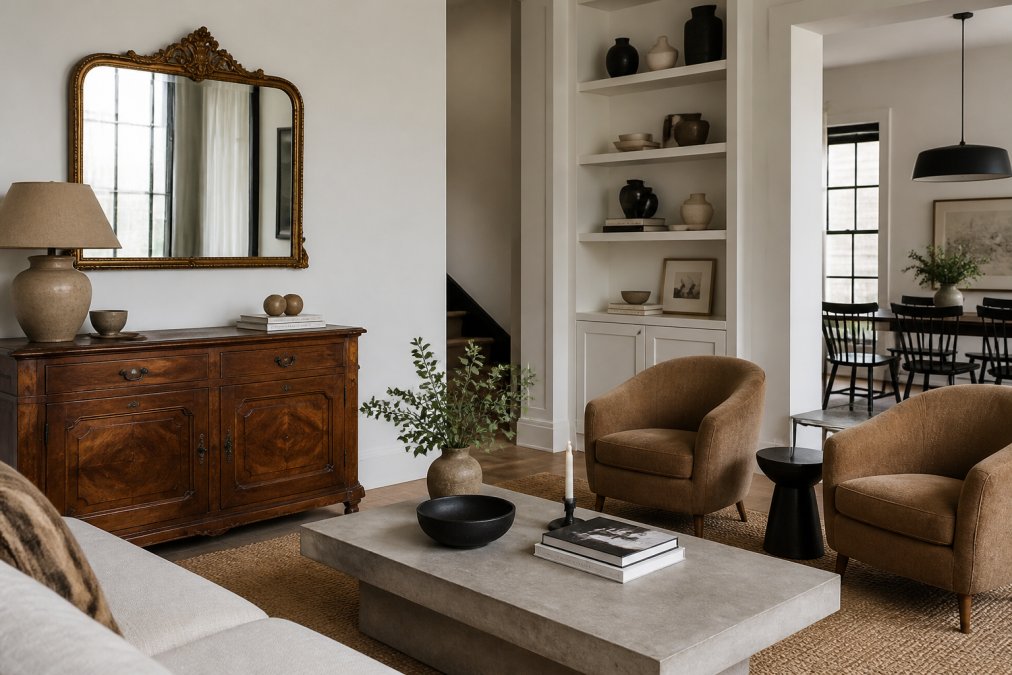
How to Mix Vintage and Modern Furniture
Table of Contents
- Start With a Unifying Color Palette
- How to Style Antique Furniture in a Modern Living Room
- Balancing Scale and Proportion in Interior Design
- Layer Texture and Materials Across Design Eras
- How to Choose the Right Size Area Rug for Mixed-Era Spaces
- Use Lighting to Anchor Your Mixed Vintage and Modern Look
- Budget-Friendly Sourcing and Maintenance for Mixed-Era Homes
- Conclusion
Last Updated: August 30, 2026
Start With a Unifying Color Palette
The foundation of successfully mixing vintage and modern furniture lies in establishing a cohesive color story. Begin by selecting two to three neutral base colors, soft beige, warm gray, or creamy white, that complement both vintage patina and contemporary finishes.
Once your neutral foundation is established, introduce one or two accent colors that appear across both vintage and modern pieces. If you're drawn to warm wood tones in your antique furniture, echo those with contemporary accessories in cognac, terracotta, or ochre. Limit your palette to five colors maximum, three neutrals and two accents, to prevent visual noise and create a curated aesthetic rather than a cluttered one.
How to Style Antique Furniture in a Modern Living Room
Styling antique furniture in a contemporary setting requires treating these pieces as intentional design elements rather than holdovers from another era. Start by treating your antique piece as a statement anchor. If you're featuring a vintage wooden dresser or credenza, position it where it commands visual attention, pair it with contemporary artwork hung directly above, and use modern throw pillows and lighting that echo its wood tones.
The silhouette of antique furniture often differs significantly from modern pieces. Vintage items tend to have ornamental detail and curved lines, while modern furniture emphasizes clean lines and minimalist forms. Rather than fighting this contrast, lean into it by positioning your antique piece against a backdrop of contemporary simplicity so its character reads as intentional juxtaposition.
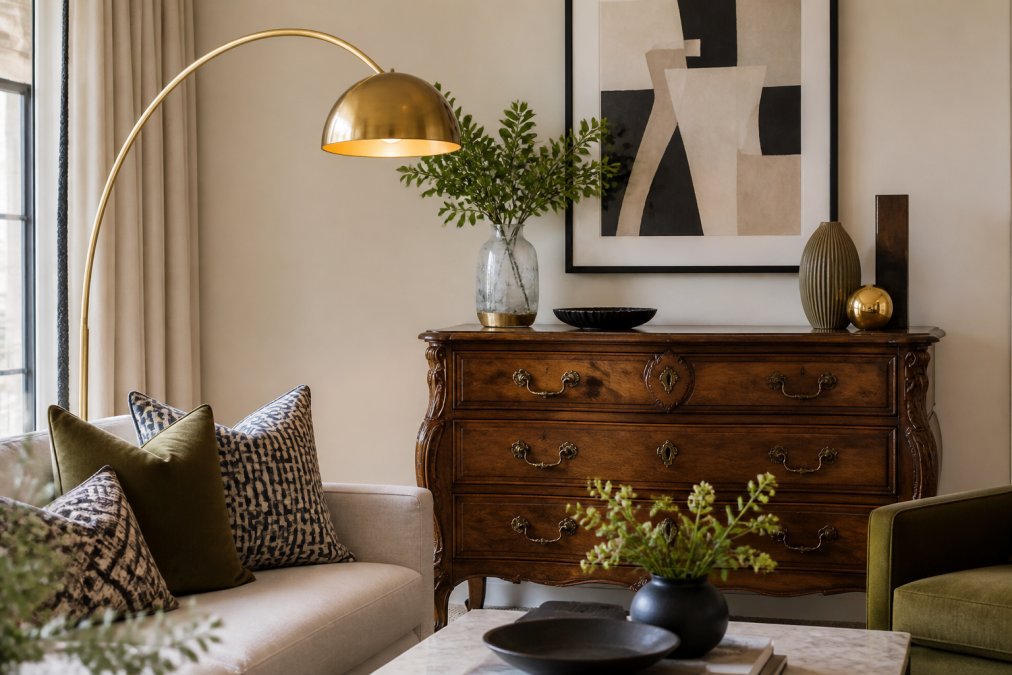
Consider the scale and proportion of your antique piece relative to your modern sofa. A delicate Victorian side table looks lost next to an oversized sectional, while a substantial mid-century credenza commands respect alongside contemporary furniture of similar visual weight. Authenticity matters less than intentionality, you're creating a home that reflects your taste across time, not a museum display.
Balancing Scale and Proportion in Interior Design
When mixing vintage and modern furniture, understanding scale and proportion becomes essential. Scale refers to the size of furniture relative to your room and to each other. Proportion refers to how the dimensions of individual pieces relate to one another.
Assess the visual weight of each piece, not just its physical dimensions. A carved wooden antique dresser carries more visual weight than a sleek modern console of similar size because detail draws the eye and creates perceived mass. Create balance through symmetry or intentional asymmetry by placing substantial pieces on opposite sides of your room or deliberately anchoring a focal point.
The golden rule: no single piece should overwhelm the space. Match the scale of your furniture to your actual room dimensions, then use color, lighting, and placement to create proportion between eras.
Layer Texture and Materials Across Design Eras
Texture is where mixing vintage and modern furniture becomes tactile and rich. Vintage furniture often features natural materials with visible grain and patina, while modern furniture emphasizes sleek finishes and minimal texture. Use these as complementary elements in a layered composition.
Begin with a textured foundation like a distressed area rug that anchors the furniture arrangement. Layer contemporary upholstery in smooth linen or soft velvet over vintage wood frames. Add metallic accents, brass, gold, or copper, that echo mid-century modern design while adding subtle shimmer against matte wood tones.

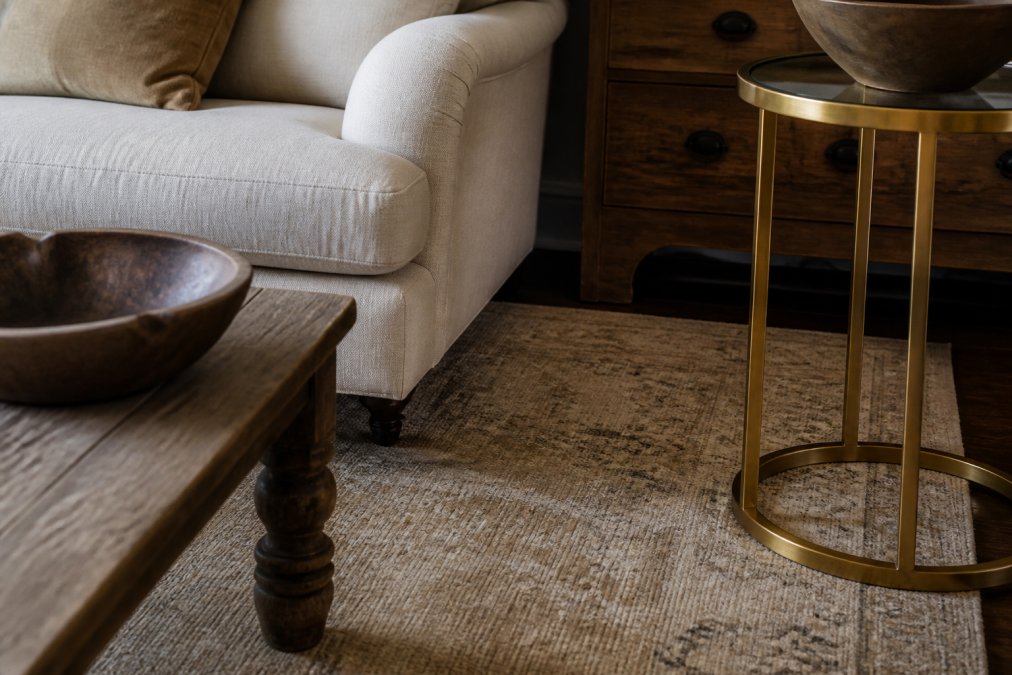
Natural materials create harmony across eras. Wood, leather, linen, and wool have been used for centuries and work equally well in vintage and contemporary contexts. Aim for contrast: smooth against rough, matte against reflective, soft against hard. A vintage wooden dresser with carved details paired with contemporary smooth upholstery and a polished mirror creates visual and tactile interest.
How to Choose the Right Size Area Rug for Mixed-Era Spaces
An area rug anchors your furniture arrangement and visually ties together pieces from different eras. The rug should extend at least 18 inches beyond the front edge of your sofa, creating a visual frame around your seating arrangement.
For mixed-era spaces, a rug with subtle pattern or distressed finish works better than solid colors. Vintage-inspired rugs with faded patterns complement both antique pieces and contemporary furniture because they read as neutral rather than trendy. Calculate your rug size by measuring your room's length and width, then subtracting 2-3 feet from each dimension. An 8x10 rug works for rooms roughly 10x12 feet or larger; a 6x9 rug suits smaller spaces.
Pattern and color matter as much as size. A vintage or distressed pattern creates visual continuity between eras, while neutral tones allow your furniture to be the focal point rather than the rug.
Use Lighting to Anchor Your Mixed Vintage and Modern Look
Lighting determines how color, texture, and proportion are perceived and experienced. Layered lighting, combining ambient, task, and accent lighting, creates depth and sophistication that a single overhead fixture cannot achieve.
For mixed-era spaces, mid-century modern lighting fixtures bridge both aesthetics. An arc floor lamp with a gold finish echoes vintage design sensibilities while reading as contemporary. Its tall silhouette and graceful curves complement both antique wooden furniture and modern upholstery. Position it to illuminate your vintage statement piece, drawing attention to the intentionality of your design choices.

Wall sconces provide accent lighting that highlights architectural features or artwork. In spaces mixing vintage and modern furniture, sconces create visual balance by drawing the eye upward and around the room.
Consider the color temperature of your bulbs. Warm white light (2700K) complements vintage pieces and creates an inviting atmosphere, while cool white (4000K) emphasizes contemporary elements. In a mixed-era space, warm light typically feels more sophisticated because it creates cohesion across design periods.
Budget-Friendly Sourcing and Maintenance for Mixed-Era Homes
Creating a home that successfully mixes vintage and modern furniture doesn't require unlimited resources. Begin by prioritizing investment pieces, purchase one or two high-quality vintage pieces that serve as focal points rather than many mediocre items.
Source vintage pieces from estate sales, antique markets, and online platforms specializing in secondhand furniture. These venues often offer better pricing than specialty antique dealers. For contemporary pieces, curated selections at reasonable price points create visual impact without requiring a complete furniture overhaul.
Maintenance becomes critical when mixing eras. Develop a routine: dust wooden pieces regularly, condition leather periodically, and protect upholstery with appropriate treatments. When refinishing vintage pieces, maintain their character by light refinishing, cleaning and waxing without stripping original finish, which preserves authenticity while improving appearance.
Storage and rotation extend the life of mixed collections. Vintage textiles benefit from careful storage away from direct sunlight. By rotating use and storing seasonal pieces properly, you maximize the lifespan of your mixed-era collection.
Mixing vintage and modern furniture creates a home that tells your story across time. Rather than viewing vintage and contemporary as opposing forces, treat them as complementary vocabularies in a design language you're fluent in.
At Eleviq9, we understand that creating sophisticated spaces means choosing pieces that transcend trend. Our curated collection of area rugs, lighting fixtures, and decorative elements are designed to work seamlessly within mixed-era homes. Whether you're anchoring a room with a vintage-inspired rug or illuminating your carefully chosen antique pieces with contemporary lighting, we provide the high-quality, thoughtfully designed pieces that elevate your space. Explore our selection and discover how the right contemporary elements complete your vintage-modern vision.
Frequently Asked Questions
Q: Can you actually mix vintage with modern furniture without it looking mismatched?
A: Yes, absolutely. The key is finding a unifying thread through color, texture, or design era. When you anchor your space with a neutral palette and use statement pieces intentionally, vintage and modern pieces create visual interest rather than chaos. The juxtaposition of eras actually strengthens a room's character when executed with intention. Many of the most sophisticated interiors today blend periods deliberately for exactly this reason.
Q: How do I know if my vintage piece will work with modern furniture?
A: Consider the silhouette, scale, and finish of your vintage piece against your modern pieces. A mid-century wooden table with clean lines pairs beautifully with contemporary seating. Look for shared design DNA, both pieces should share either a color tone, material finish, or design philosophy. Test the pairing in your space before committing. If the visual weight feels balanced and the color story cohesive, it will work.
Q: What's the best way to choose the right size area rug when mixing design eras?
A: Your rug should anchor your seating arrangement and define the room's focal point. For a living room, aim for a rug that extends at least 18 inches beyond your sofa on all sides. In smaller spaces, a 5x8-foot rug works well for seating clusters. A vintage-style rug like the [Beige Vintage Area Rug | Living Room, Bedroom & Dining Decor](https://www.eleviq9.store/products/transform-your-space-with-our-elegant-8x10-washable-beige-vintage-area-rug-perfect-for-living-rooms) (8x10 feet) bridges eras beautifully and provides enough scale to ground mixed furniture pieces while adding texture and warmth.
Q: How do I maintain vintage pieces when mixing them with modern furniture?
A: Vintage pieces require thoughtful care depending on their materials. Wood furniture benefits from regular dusting and occasional polishing. Upholstered vintage pieces need consistent vacuuming and spot-cleaning. Pair vintage pieces with durable modern upholstery that can handle daily use, and your mixed-era home stays beautiful and functional long-term.
This article was written using GrandRanker
Frequently Asked Questions
Q: Can you actually mix vintage with modern furniture without it looking mismatched?
A: Yes, absolutely. The key is finding a unifying thread through color, texture, or design era. When you anchor your space with a neutral palette and use statement pieces intentionally, vintage and modern pieces create visual interest rather than chaos. The juxtaposition of eras actually strengthens a room's character when executed with intention. Many of the most sophisticated interiors today blend periods deliberately for exactly this reason.
Q: How do I know if my vintage piece will work with modern furniture?
A: Consider the silhouette, scale, and finish of your vintage piece against your modern pieces. A mid-century wooden table with clean lines pairs beautifully with contemporary seating. Look for shared design DNA—both pieces should share either a color tone, material finish, or design philosophy. Test the pairing in your space before committing. If the visual weight feels balanced and the color story cohesive, it will work.
Q: What's the best way to choose the right size area rug when mixing design eras?
A: Your rug should anchor your seating arrangement and define the room's focal point. For a living room, aim for a rug that extends at least 18 inches beyond your sofa on all sides. In smaller spaces, a 5x8-foot rug works well for seating clusters. A vintage-style rug like the [Beige Vintage Area Rug | Living Room, Bedroom & Dining Decor](https://www.eleviq9.store/products/transform-your-space-with-our-elegant-8x10-washable-beige-vintage-area-rug-perfect-for-living-rooms) (8x10 feet) bridges eras beautifully and provides enough scale to ground mixed furniture pieces while adding texture and warmth.
Q: How do I maintain vintage pieces when mixing them with modern furniture?
A: Vintage pieces require thoughtful care depending on their materials. Wood furniture benefits from regular dusting and occasional polishing. Upholstered vintage pieces need consistent vacuuming and spot-cleaning. Pair vintage pieces with durable modern upholstery that can handle daily use, and your mixed-era home stays beautiful and functional long-term.