
 ultimate-guide
How to Avoid Mass Produced Furniture (2026 Guide)
Table of Contents
- Why Avoiding Mass Produced Furniture Matters
- Fast Furniture vs Heirloom Furniture: What Actually Changes
- How to Spot High Quality Furniture When You Shop
- Where to Shop Instead of Mass Market Retailers
- Best Luxury Furniture Brands for 2026 and What They Offer
- A Smart Budget for Furniture That Lasts Decades
- Conclusion: Build a Home With Pieces Worth Keeping
- Frequently Asked Questions
Last Updated: September 7, 2026
Why Avoiding Mass Produced Furniture Matters
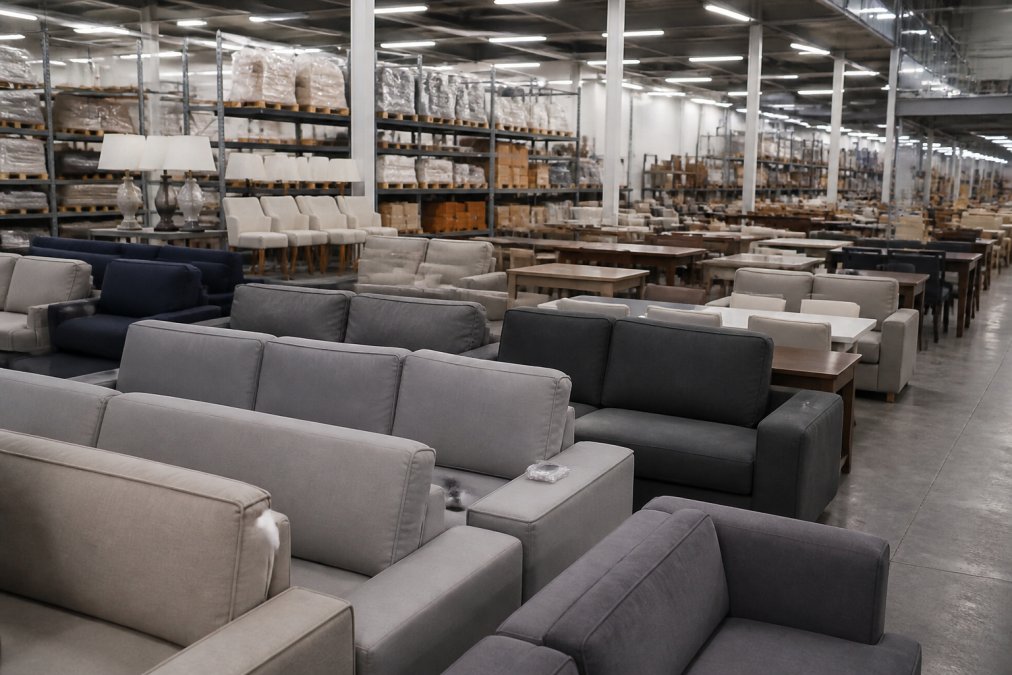
Mass produced furniture dominates most living rooms today, yet it is precisely what makes those spaces feel interchangeable and forgettable. The term describes pieces manufactured quickly on automated assembly lines, often from particleboard and thin veneers, designed to look appealing in a showroom but engineered to fail within a few years. Avoiding it is a practical decision about durability, environmental impact, and the daily experience of your home.
This guide covers how to spot high quality furniture through construction details, where to shop instead of mass market retailers, and how to build a budget that prioritizes longevity.
Fast Furniture vs Heirloom Furniture: What Actually Changes
The distinction between fast furniture and heirloom furniture comes down to a single question: was this piece designed to be repaired or replaced? Fast furniture is built with staples, glue, and particleboard, materials that make disassembly and repair nearly impossible. Heirloom furniture relies on joinery, solid hardwood, and finishes that can be sanded and reapplied, meaning a well-made piece can serve multiple generations with proper care.
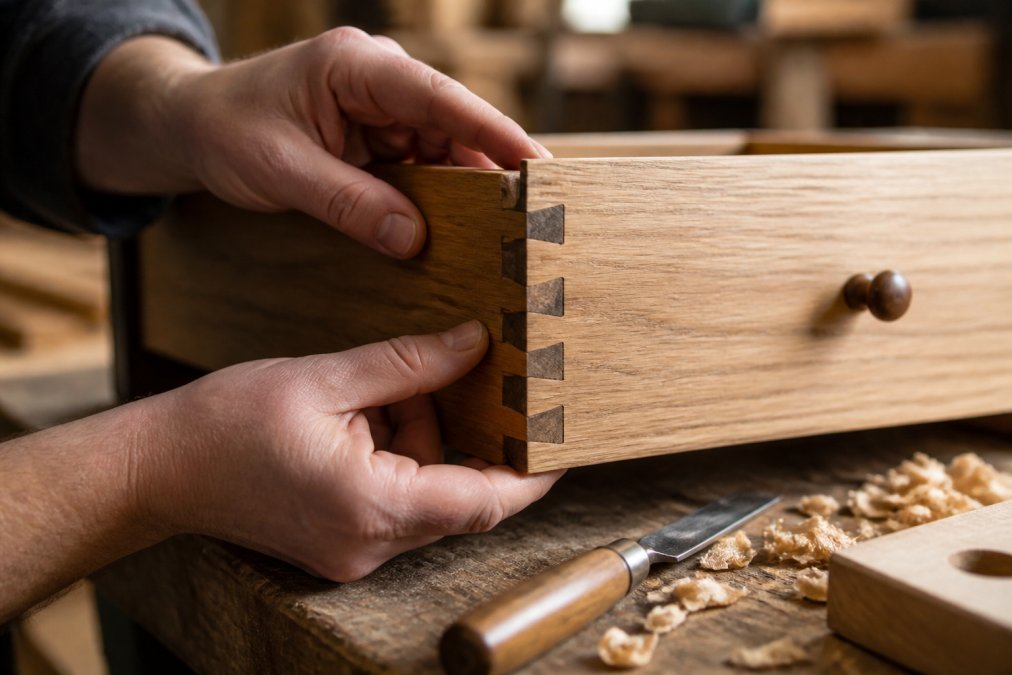
The construction techniques tell the story instantly. Dovetail joints and mortise and tenon connections lock pieces together mechanically, while mass production favors butt joints reinforced only by glue and metal fasteners. Exposed particleboard edges or a back panel held on with staples signal a product with a predetermined lifespan.
How to Spot High Quality Furniture When You Shop
Learning how to spot high quality furniture requires you to inspect pieces the way a woodworker would, not a decorator. The goal is to find pieces built on solid wood and mechanical joinery, not particleboard and glue. Here is a systematic inspection routine for any piece, whether in a showroom or a thrift store.
The 5-Point Inspection Routine
1. The Drawer Test
Pull the drawer all the way out. Look at the sides: are they solid wood or veneer over MDF? A dovetail joint, interlocking, fan-shaped pins, is the gold standard; a locked rabbet or dowel joint is acceptable. Avoid butt joints where sides are simply glued and stapled. The drawer bottom should be a solid wood panel set into a groove, not cardboard stapled underneath. Wood-on-wood runners or metal slides with ball bearings are good signs; plastic rollers are a red flag.
2. The Back Panel Test
Tip the piece away from the wall and examine the back panel. On quality furniture, this is solid hardwood plywood set into a rabbet and screwed into place. On mass-produced furniture, it is a thin sheet of fiberboard nailed or stapled to the back edge. This is one of the fastest ways to tell the difference.
3. The Frame and Joint Stress Test
Apply firm, lateral pressure to the top of the piece. Does it rack or wobble? A well-built frame uses mortise and tenon or dowel joints at stress points, which are mechanically locked and do not flex. A mass-produced frame relies on glue and metal brackets, which give and creak under pressure. For chairs and sofas, sit on the edge and lean back, listening for creaks and feeling for movement.
4. The Material Identification Test
Run your hand across the surface and look at the edges and underside. Solid wood has a visible, continuous grain pattern; veneer over particleboard often shows a distinct seam or color difference at the edges. Exposed particleboard edges have a characteristic speckled, sawdust-like appearance, if you see this, the piece is not built to last. Check the underside of a table or chair seat: is it solid wood or a hollow core with a paper or plastic covering?
5. The Hardware Test
Open and close doors and drawers. Are the hinges and slides from a known manufacturer like Blum or Accuride? These are serviceable and replaceable. Mass-produced furniture often uses proprietary, non-standard hardware that is difficult to replace. Look for screws driven into solid wood, not particleboard where they will strip out over time.
Understanding the Materials: A Quick Reference
| Material | What It Is | Durability | Repairability |
|---|---|---|---|
| Solid Hardwood (Oak, Maple, Walnut, Cherry) | Wood cut directly from the tree. | Excellent. Can be sanded and refinished multiple times. | High. Scratches and dents can be steamed or sanded out. |
| Hardwood Plywood | Layers of wood veneer glued together in a cross-grain pattern. | Very Good. Strong and dimensionally stable. | Moderate. Can be refinished, but not as deeply as solid wood. |
| MDF (Medium-Density Fiberboard) | Wood fibers mixed with resin and pressed into sheets. | Poor. Prone to sagging and water damage. Edges crumble. | Very Low. Once damaged, it is nearly impossible to repair. |
| Particleboard | Sawdust and wood shavings mixed with glue and pressed. | Very Poor. The lowest quality core material. | None. It disintegrates when wet and cannot hold screws. |
Mass-market retailers often use a solid wood frame for the primary structure but MDF or particleboard for less visible components like drawer bottoms, back panels, and shelf supports. This deliberate cost-saving measure compromises the piece's lifespan, so your inspection should target these hidden areas.
The Finish: More Than Just Looks
Finally, examine the finish. A high-quality finish penetrates the wood, such as oil, shellac, or catalyzed lacquer, and feels smooth and even. A cheap finish is often a thin, plastic-like coating that chips or peels. Rub your hand across the surface; a quality finish feels warm and natural, not like plastic. Ask the salesperson or maker what type of finish is used, if they cannot tell you, that is a red flag. The finish is the first line of defense against moisture and wear.
Where to Shop Instead of Mass Market Retailers
Mass-market retailers dominate the furniture landscape, but they are not the only option. Beyond local woodworkers and regional studios, the most underutilized resource for heirloom-quality furniture is the second-hand market. This is not just a budget play; it is a strategic move to acquire pieces built with old-growth hardwoods and time-tested joinery that are simply not made anymore. Here is a tactical guide to sourcing high-quality vintage furniture.
How to Source High-Quality Vintage Furniture
1. Know Your Hunting Grounds
- Thrift Stores (Goodwill, Salvation Army): Hit these on weekdays, right after they restock. The turnover is high, and the best pieces go fast. Look past the upholstery; you are buying the frame.
- Estate Sales: These are the single best source for high-quality furniture. The owners are often downsizing and are motivated to sell. Go on the last day of the sale for the best prices, but be prepared for the best pieces to be gone. Go early on the first day if you are looking for a specific item.
- Auction Houses: Local auction houses are a hidden gem. They often have weekly or monthly sales that include furniture from estates. You can inspect the pieces during the preview period, and you can often get pieces for well below retail. Do not be intimidated by the process; it is straightforward.
- Facebook Marketplace and Craigslist: These are the modern-day flea markets. Use specific search terms like "solid oak dresser," "teak sideboard," or "mid-century walnut table" to filter out the particleboard junk. Set up alerts for your desired keywords.
- Consignment Shops: These are more curated than thrift stores and often have higher-quality pieces. The prices are higher, but the pieces have been vetted.
2. The 30-Second Pre-Filter
Before a full inspection, use this pre-filter to quickly eliminate pieces not worth your time:
- The Lift Test: Try to lift one corner of the piece. If it feels surprisingly light for its size, it is likely made of particleboard or hollow core. Solid wood is heavy.
- The Knock Test: Knock on the side or top panel. Solid wood will produce a solid, dense sound. Particleboard will sound hollow or like a cheap drum.
- The Smell Test: A strong, chemical smell indicates cheap glues and finishes. A musty smell can be cleaned out, but a chemical smell is harder to remove.
- The Magnet Test: Run a magnet along the back and underside. If it sticks, there are steel fasteners or staples holding it together, which is a sign of mass production.
3. The Value of Solid Wood from Past Decades
Furniture made before the 1980s was predominantly constructed from solid hardwoods like oak, maple, walnut, and teak. These woods were often old-growth, meaning they have a tighter grain and are denser and more durable than fast-grown plantation wood used today. A solid oak dresser from the 1970s, found at a thrift store for a modest sum, will outlast a new dresser from a big-box retailer several times over. Older pieces also use dovetail joints and mortise and tenon construction as standard practice, not as a premium feature.
How to Negotiate and Close the Deal
- Do Your Research: Before you negotiate, know the retail price of a comparable new piece. This gives you a baseline for what the vintage piece is worth.
- Inspect for Damage: Look for water rings, deep scratches, and loose joints. These are all bargaining chips. A piece with a wobbly leg is a negotiation opportunity, not a deal-breaker.
- Offer a Fair Price: At estate sales, offering 70-80% of the asking price is common. At thrift stores, the price is usually firm, but you can ask if they have a discount day. Many thrift stores offer a 25-50% discount on furniture that has been on the floor for over 30 days.
- Arrange for Transport: Have a plan for how you will get the piece home. Many sellers do not offer delivery. Rent a truck or bring a friend with a van.
Upcycling and Refinishing: The Next Step
Upcycling such finds, whether through refinishing or reupholstering, keeps consumer waste out of landfills and supports a more sustainable cycle. A scratched top can be sanded down and re-oiled; a sofa with dated fabric can be reupholstered. This is often less expensive than buying new and gives you a custom piece that fits your exact style. When you do buy new, seek out makers who publish their joinery methods and offer repair services, which signals confidence in the piece's longevity.
Best Luxury Furniture Brands for 2026 and What They Offer
For those ready to invest, the best luxury furniture brands for 2026 distinguish themselves through heirloom quality construction, responsible material sourcing, and designs that transcend seasonal trends. These houses typically use solid hardwoods, hand-finished surfaces, and time-tested joinery, and they publish clear information about their workshops and supply chains. A genuine luxury piece is defined by its repairability and ability to age gracefully, not by a logo or high price tag.
When evaluating a brand, look past the styling and ask what happens in ten years. Can the finish be refreshed? Are replacement cushions or hardware available? Does the company offer a repair program? Brands that answer yes are investing in the piece's full life cycle, the opposite of the fast furniture model. This commitment to fair labor practices and sustainable materials justifies a higher initial outlay because the cost per year of use drops dramatically.
A Smart Budget for Furniture That Lasts Decades
Allocating a budget for furniture that lasts decades requires shifting your mindset from purchase price to cost per year of ownership. A mass produced sofa priced at a few hundred dollars might last three to five years, while a well-constructed piece costing several times more can last twenty or thirty years with proper maintenance. The math favors the investment, but only if you buy construction quality rather than brand marketing.
A practical framework is to prioritize the pieces you use daily: bed frames, sofas, dining tables, and dressers deserve the largest share of your budget. Decorative accents, like vases, mirrors, and wall art, offer a lower-risk way to refresh a room without committing to a major piece. At Eleviq9, our curated collection of ceramic vases and statement decor, such as the Green Gold Ceramic Vase with abstract lovebird design, allows you to add personality to a space anchored by heirloom furniture, blending modern bohemian aesthetics with pieces built to last.

| Budget Priority | Suggested Allocation | Best Investment | Expected Lifespan |
|---|---|---|---|
| Daily-use furniture | 60-70% | Solid wood bed, sofa, dining table | 20+ years |
| Accent decor | 20-30% | Ceramic vases, mirrors, lighting | 10+ years |
| Trend pieces | 10% | Lighter, replaceable items | 3-5 years |
Maintenance and repairability are the hidden factors that make an heirloom purchase worthwhile. Learning basic skills, like tightening joinery or reapplying oil finishes, extends the life of your furniture. When a piece does need professional help, a local woodworker can often restore it for less than the cost of replacement, a service that mass produced furniture rarely justifies.
Conclusion: Build a Home With Pieces Worth Keeping
Avoiding mass produced furniture is a commitment to a different set of values: durability over disposability, craftsmanship over convenience, and sustainability over short-term savings. The challenge is resisting the immediacy of fast furniture and the allure of a fully furnished home in one weekend. Building a collection of heirloom quality pieces takes time, but each addition becomes a permanent part of your home's character.
Eleviq9 offers a curated selection of luxury home decor and modern furniture that prioritizes versatile, high-quality design. From elegant lighting and decorative mirrors to statement wall art and area rugs, every piece is chosen to help you create a sophisticated, personalized space. Get started with Eleviq9 and build a home where each piece is worth keeping.
Frequently Asked Questions
What are the signs of low-quality mass-produced furniture?
Look for particleboard or MDF instead of solid wood, printed wood grain patterns, visible staples, and plastic hardware. Check the back panels and drawer bottoms, where thin materials and glue are common. Uneven gaps or wobbly legs suggest automated assembly with little quality control. If the piece feels light for its size, that is a strong signal the frame is hollow or filled with cardboard. Flip cushions and inspect the joinery before you buy.
Why is avoiding mass-produced furniture better for the environment?
Mass-produced furniture relies on fast furniture cycles that create enormous consumer waste. Most pieces end up in landfills within a few years because they cannot be repaired. Choosing handcrafted or heirloom quality furniture reduces this waste dramatically. Quality pieces also avoid toxic chemicals and VOC emissions common in cheap particleboard and synthetic finishes. Buying less, but buying better, lowers the demand for automated manufacturing that depletes resources.
How can I identify artisan-made furniture versus factory-made?
Artisan-made furniture shows signs of human hands. Look for dovetail joints, mortise and tenon construction, and slight variations in wood grain. Turn the piece over and check the underside, handcrafted items have sanded, finished surfaces everywhere. Factory-made furniture relies on veneer over particleboard and hidden staples. Ask the seller about their material sourcing and fair labor practices. A genuine artisan will explain their woodworking process without hesitation.
What materials should I look for to ensure furniture longevity?
Prioritize solid wood like oak, walnut, maple, or cherry over particleboard and MDF. Hardwood frames resist wear and tear far better than softwood or composite materials. Check that drawers use dovetail joints rather than glued butt joints. Look for kiln-dried lumber, which resists warping. Quality craftsmanship also means using metal hardware that can be tightened or replaced, not plastic clips that break. These choices determine structural integrity and how long a piece survives daily use.